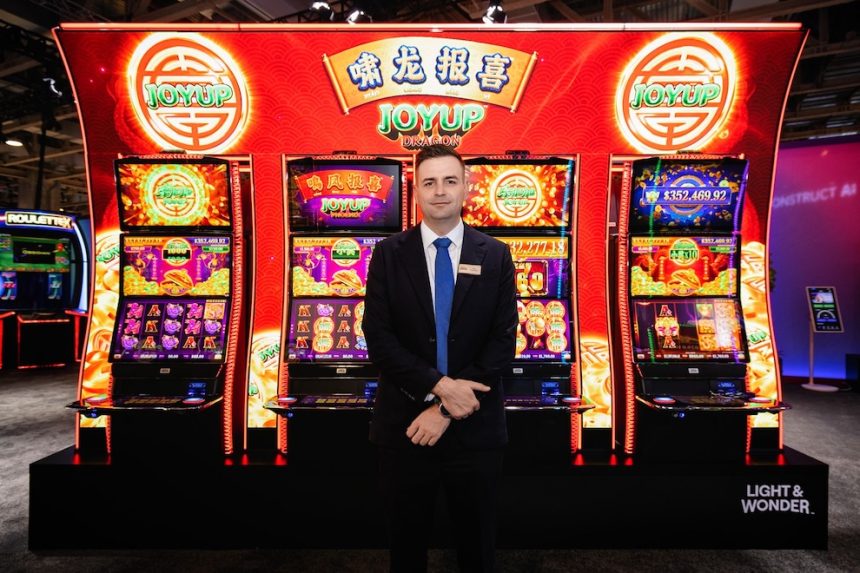
Phil Stormonth, new senior director of sales for Asia at casino technology group Light & Wonder Inc, says he is acting as “one point of contact” for all the regional sales team, covering a “full suite” of Light & Wonder products that the firm categorises as “finished goods and systems”.
That includes “proprietary table games,” and “any progressive or jackpot on top” of such products; “system componentry that connects to tables or the casino management system, and other finished goods such as our electronic table game line and electronic gaming machines,” said Mr Stormonth (pictured).
In his new role, Mr Stormonth will report to Jamie Dorbian, managing director, international, based in London in the United Kingdom.
In terms of the expectation of the company, Mr Stormonth said communication is clear and supportive. Matt Wilson, the group’s president and chief executive, has “made it very clear… that we have an EBITDA [earnings before interest, taxation, depreciation, and amortisation] target for 2028.”
“In order to get there, we have to continue to be a growth company, which we’re proud to say” is being pursued, the executive stated.
The new senior director of sales for Asia noted that the region is challenging and exciting in that – while made of multiple markets with their own needs – a common factor is the “precision” with which casino operators manage their businesses.
He stated: “It’s fascinating not only to offer solutions here – be part of that success – but also to… learn what these guys are doing.”
Macau slots, ‘Disneyfication’
In the Macau market, first-quarter slot machine gross gaming revenue (GGR) was MOP3.98 billion (about US$493 million), up 21.6 percent from the prior-year period, and up 9.6 percent quarter-on-quarter. That is according to market-structure data released by the Macau government in April.
Those numbers are “super encouraging, especially considering the modest base that Macau has had” historically, versus table-game GGR, noted Mr Stormonth.
Electronic games players in Macau are not typically “wallet-constrained… they’re just time-constrained.”
So, in the time you have their attention as a manufacturer, you need to make the style of game play “intuitive” for the players to grasp.
The Macau slot market is maturing, he suggests. “It’s not just red and gold, and dragons,” he added, referring to graphics and themes of games.
“We’re actually growing the market” in Asia with “cartoony” and story-based games such as “Huff N Even More Puff” – which he describes as a “three little pigs” theme.
Mr Stormonth stated: “We’ve had feedback from operators saying ‘Hey, we have new sign-ups. These people never played slots’. That’s how you grow a market… you need to innovate” and convert “non-players to try a game out”. That’s “exactly what happens” in Australia and Las Vegas, he suggests.
The executive said that while in reality “two or three companies” supply the majority of slots on Macau floors, even if a supplier offers the “best game that doesn’t mean you [the operator] should only have that game”.
He added: “One operator talks about almost Disnefying the experience and having a floor where you can move from one experience to another. Disney doesn’t just have one ride. It has different zones.”
Mr Stormonth said the idea is casino players can move around the floor as a “journey and try different things… not just sit on one game and leave. That’s not enjoyable.”
That is where “signage comes into play; lighting; community jackpots; celebration prizes,” – typically free play awards – “tie-ins with F&B… we’ve seen a lot of that with certain operators,” stated the executive.
Jackpot management, Philippines
Asked about the use of themed zones on behalf of individual manufacturers, he notes they can offer “an element of choice” for players and have “been around for some time”. But an important focus for casino games suppliers – in collaboration with operators – should be, said Mr Stormonth, “jackpot strategy”.
In markets such as Macau, for example, “players don’t necessarily look up at the ‘grand’ jackpot and say, ‘I’m going to win that’. No, they’re mature enough and they’ve played enough to know ‘I’m probably not going to win that’.”
Mr Stormonth stated: “Instead they look at the ‘major’ jackpot, that can hit two or three times a day… or even a ‘minor’ or ‘mini’ jackpot in terms of attainability.”
GGRAsia asked Mr Stormonth about whether the intellectual-property dispute between Light & Wonder and Australian slot maker Aristocrat Leisure Ltd over the former’s “Dragon Train” slot product had any impact on Asian casino operators’ attitude toward Light & Wonder.
He stated: “I think people move on regarding these types of thing. Our [operator] customer base is looking for us to win. They’re very supportive of our [game-design] studios. I think we have eight or nine studios now, serving Asia.”
In the Philippines gaming machine market, while Manila’s large-scale commercial resorts are a “test” site for the country overall, there are regional differences particularly in terms of players’ slot preferences.
Slot games that “do well in Entertainment City, don’t always hit as hard in the other regions, and vice versa,” said Mr Stormonth.
“Even jackpot sizes are different” region to region, as a factor of denomination sizes. As a supplier it is necessary to “walk in” and “understand” each market, suggested the executive.
Obsidian and live-dealer ETGs
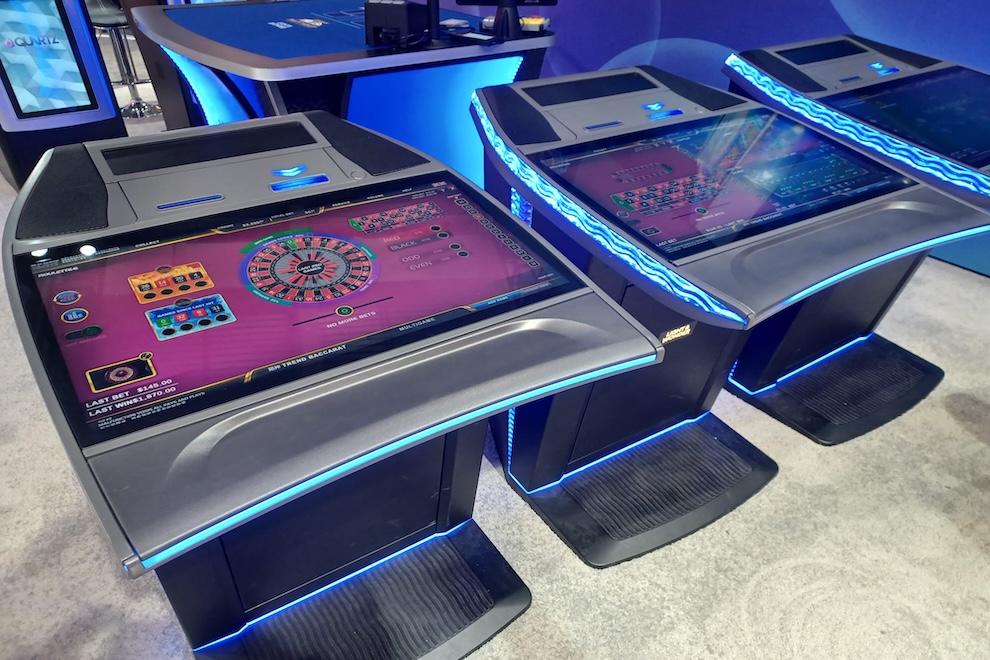
Regarding Light & Wonder’s electronic table game (ETG) offering in the Asia-Pacific region as a whole, its Obsidian terminal (pictured above in a file photo) – available in either stadium or hybrid format – is a key platform.
Overall, in the ETG category, the company claims “60 percent of the ETG offering” in the Singapore casino duopoly, as well as a “high percentage” of electronic gaming machines (EGMs) in the city-state, and claims a lead for ETGs in South Korea. In Malaysia, a one-casino market, “we have a lot of standalone units” in the ETG category, said Mr Stormonth.
In September last year, Light & Wonder and another ETG supplier, Spintec d.o.o, indicated they were poised to enter Macau’s live-dealer ETG market.
The news came soon after a legal ruling last year, when Macau’s Court of First Instance said a key patent that another supplier, LT Game Ltd – held for its own flagship live multi game (LMG) product “must be declared null and void”.
The key patent – which covers the use of multiple terminals for electronic casino table games that involve a human croupier – is set to expire in October this year, according to Macau’s patent system.
“We have authority from several legal” sources “that we can start to move ahead” in that live-dealer “world” in Macau, Mr Stormonth noted.
He added that while introduction of Light & Wonder live-dealer ETG product is “dependent on the operator” preference, the company “have approvals of Obsidian” by Macau’s gaming regulator, the Gaming Inspection and Coordination Bureau.
“We’re just being very strategic about the placement of those games. We’re building the right software, the right UI [user interface], to ensure that we really run with that” opportunity in Macau, he explained.